 English

 Русский
 Bahasa Indonesia
 Bahasa Malay
 ไทย
 Español
 Deutsch
 Български
 Français
 Tiếng Việt
 中文
 বাংলা
 हिन्दी
 Čeština
 Українська
 Română


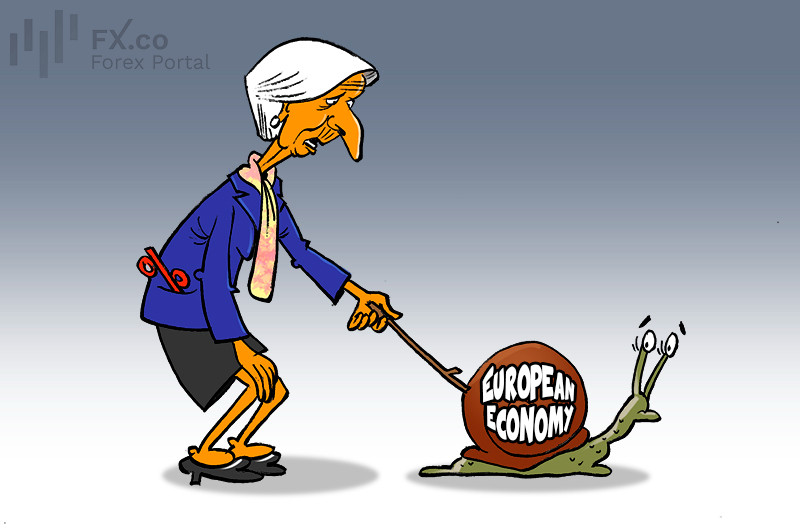
The European Central Bank is increasingly likely to forgo another interest rate increase at its meeting on October 29 in light of deteriorating macroeconomic indicators across the bloc, according to a Bloomberg survey of economists. The main constraint for the regulator is a sharp slowdown in activity: eurozone GDP growth eased to a meager 0.2% in the third quarter from 0.6% in Q2.
Analysts say the resilience the European economy showed after the outbreak of conflict around Iran is waning. Simona Delle Chiaie, chief euro area economist at Bloomberg Economics, warned that the ECB is caught in a classic stagflation trap. Inflation remains elevated and could reach 4% by year‑end, financial conditions are tightening rapidly, and the risk of a prolonged recession is rising. At its September 10 meeting, the ECB already raised all three policy rates by 25 basis points (to 2.5%, 2.65%, and 2.9%, respectively), but this week, the central bank is expected to pause and postpone the third tightening round of the year until December.
Political turbulence in France, the eurozone’s second‑largest economy, is an additional destabilizing factor. Sharp budgetary disputes and ongoing street protests are directly weighing on sovereign bonds and equity markets. In these circumstances, monetary authorities in Frankfurt will have to shift focus from a singular fight against inflation toward protecting faltering growth as domestic demand contracts.