 English
 Русский
 Bahasa Indonesia
 Bahasa Malay
 ไทย
ไทย Español
 Deutsch
 Български
 Français
 Tiếng Việt
 中文
中文 বাংলা
বাংলা हिन्दी
 Čeština
 Українська
 Română
FX.co ★ Actual patterns. Technical analysis and trading recommendations

Technical Analysis Patterns
There is nothing more precious to a trader than an ability to predict a further price movement. Technical analysis is a key to your successful transaction. At the same time, you can rely on common and recurring situations that arise in the same circumstances. Our Technical Analysis Patterns section features all trading recommendations based on the technical analysis patterns that help traders make projections and turn a profit.
Instrument:
1 selected
#Bitcoin
EURCHF
EURGBP
EURJPY
EURUSD
EURCAD
EURRUB
EURNZD
USDCAD
USDCHF
USDJPY
USDRUB
NZDCAD
NZDUSD
NZDCHF
NZDJPY
AUDCAD
AUDCHF
AUDJPY
AUDUSD
GBPUSD
GBPJPY
GBPAUD
GBPCHF
GOLD
SILVER
#AAPL
#AMZN
#EBAY
#FB
#GOOG
#MCD
#MA
#KO
#INTC
#MSFT
#NTDOY
#PEP
#TSLA
#TWTR
Figure:
All
Triangle
Rectangle
Pennant
Flag
Head and Shoulders
Double Top
Triple Top
Timeframe:
All
M5
M15
M30
H1
D1
Signal strength:
All
High
Medium
Low
Signal direction:
All
Buy
Sell
EURNZD
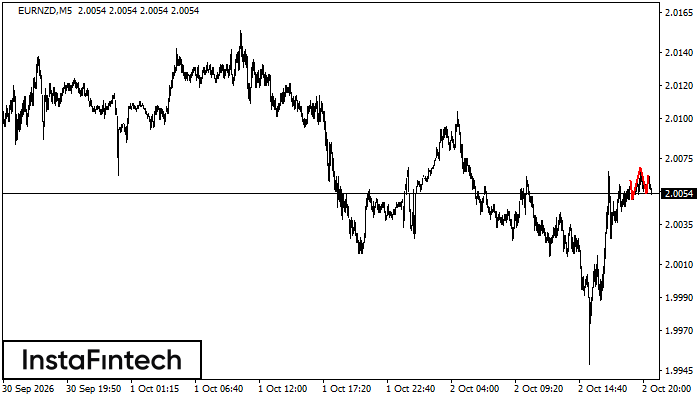
EURNZD M5
Triple Top
The Triple Top reversal pattern has formed on the EURNZD M5 chart. Its upper boundary is at 2.0062/2.0065, its lower boundary is at 2.0050/2.0054, and its current width is 16 points. If the confirmation support at 2.0050 is broken, that width can be used to project the downward move.
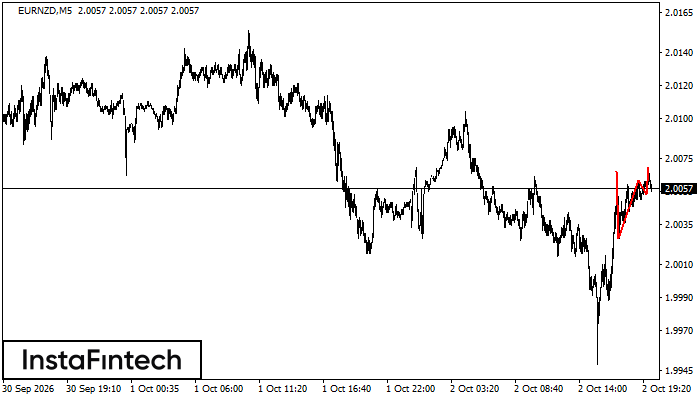
EURNZD M5
Triple Top
The Triple Top pattern has formed on the chart of EURNZD M5 and signals a possible trend reversal. After the third peak forms, a break below the confirmation support at 2.0026 may confirm the bearish scenario. The projected peak-to-trough width is 9 points.
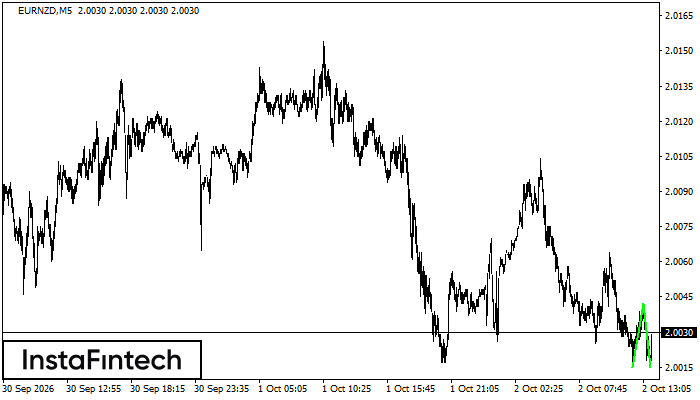
EURNZD M5
Double Bottom
The Double Bottom pattern has formed on the EURNZD M5 chart. Its upper boundary is at 2.0042, its lower boundary is at 2.0015, and its width is 27 points. A break above the upper boundary at 2.0042 may confirm a trend reversal, with the pattern width defining the projected distance to a potential Take Profit level.
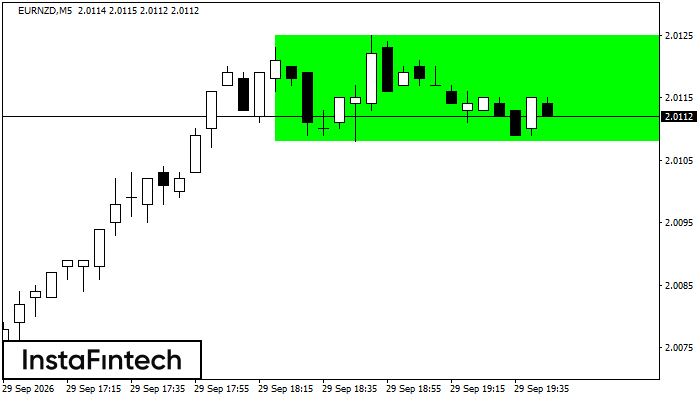
EURNZD M5
Bullish Rectangle
The Bullish Rectangle has formed on the EURNZD M5 chart. This is a trend continuation pattern bounded by the lower boundary at 2.0108–2.0108 and the upper boundary at 2.0125–2.0125. A breakout above the upper boundary is likely to signal a continuation of the uptrend.
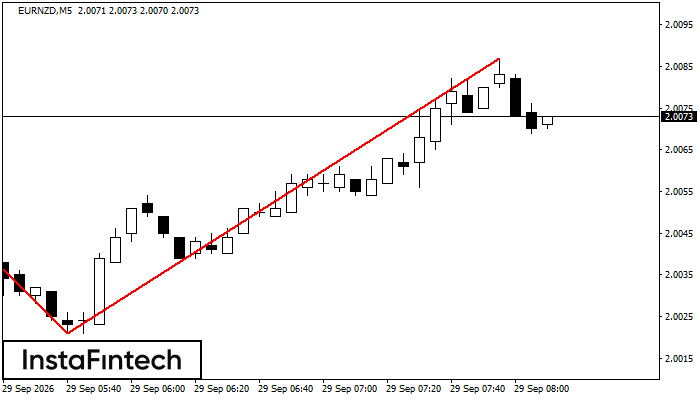
EURNZD M5
Double Top
The Double Top reversal pattern has formed on the EURNZD M5 chart. Its upper boundary is at 2.0087, its lower boundary is at 2.0021, and its width is 66 points. A break below the lower boundary is likely to confirm further downward movement toward 2.0006.
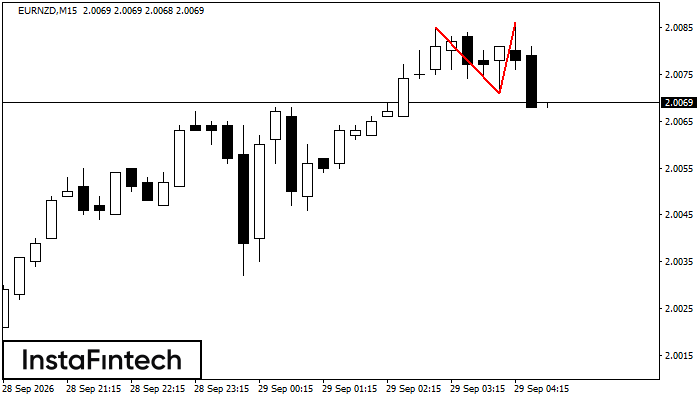
EURNZD M15
Double Top
The Double Top reversal pattern has formed on the EURNZD M15 chart. Its upper boundary is at 2.0085, its lower boundary is at 2.0071, and its width is 15 points. A short position may be considered below the lower boundary at 2.0071, with a potential target at 2.0048.
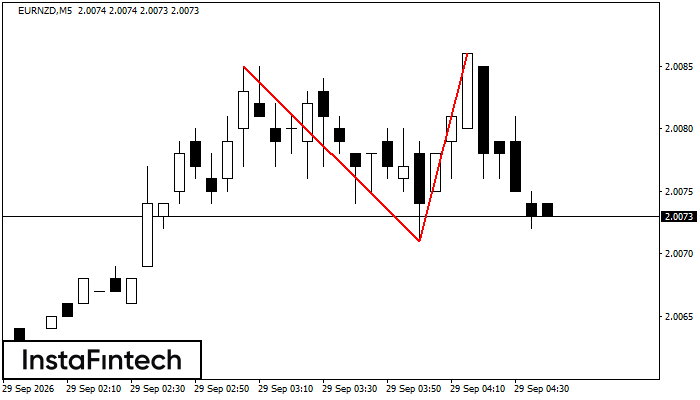
EURNZD M5
Double Top
The Double Top reversal pattern has formed on the EURNZD M5 chart. Its upper boundary is at 2.0086, its lower boundary is at 2.0071, and its width is 15 points. A break below the lower boundary is likely to confirm further downward movement toward 2.0056.
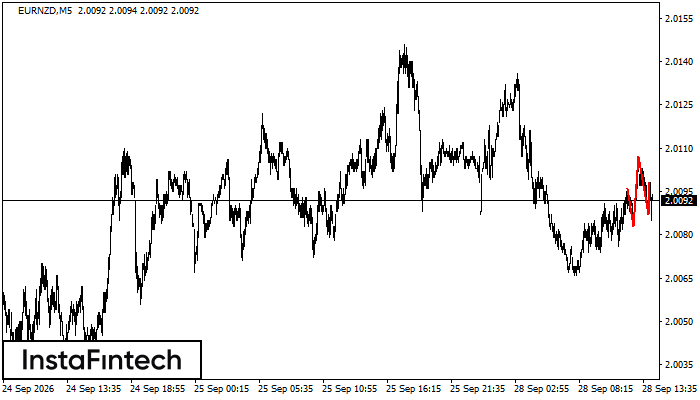
EURNZD M5
Head and Shoulders
The Head and Shoulders pattern has formed on the EURNZD M5 chart. The head high is at 2.0107, while the neckline passes through 2.0083/2.0087. The pattern may reverse the current uptrend. A break below the lower neckline anchor may confirm the bearish reversal.
EURNZD M5
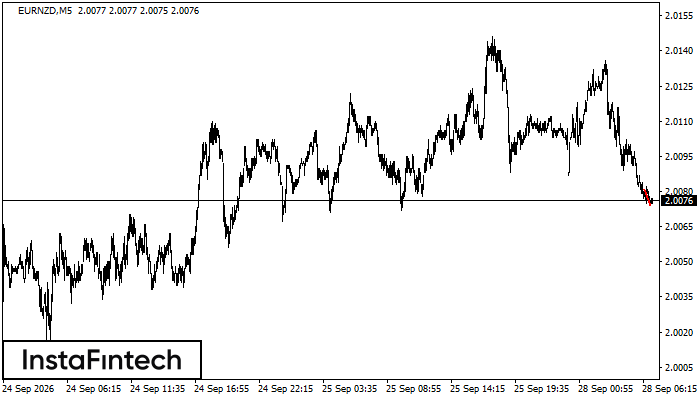
Bearish Flag
The Bearish Flag pattern has formed on the EURNZD M5 chart. Its lower boundary passes through 2.0074/2.0076, while its upper boundary passes through 2.0076/2.0078. The projected flagpole height is 7 points. The formation indicates that the downtrend is likely to continue. A break below 2.0074 would confirm further downward movement.
EURNZD M5
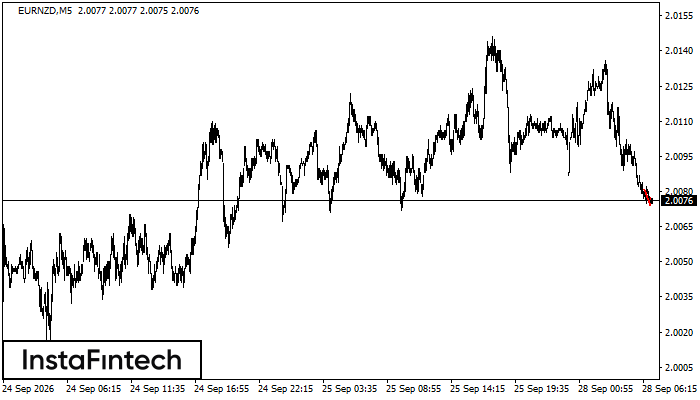
Bearish Pennant
The Bearish Pennant pattern has formed on the EURNZD M5 chart and signals a potential continuation of the existing trend. The pattern low is at 2.0074, and the projected flagpole height is 7 points. If the price breaks below the pattern low at 2.0074, the downtrend is expected to continue toward 2.0059.