 English
 Русский
 Bahasa Indonesia
 Bahasa Malay
 ไทย
ไทย Español
 Deutsch
 Български
 Français
 Tiếng Việt
 中文
中文 বাংলা
বাংলা हिन्दी
 Čeština
 Українська
 Română

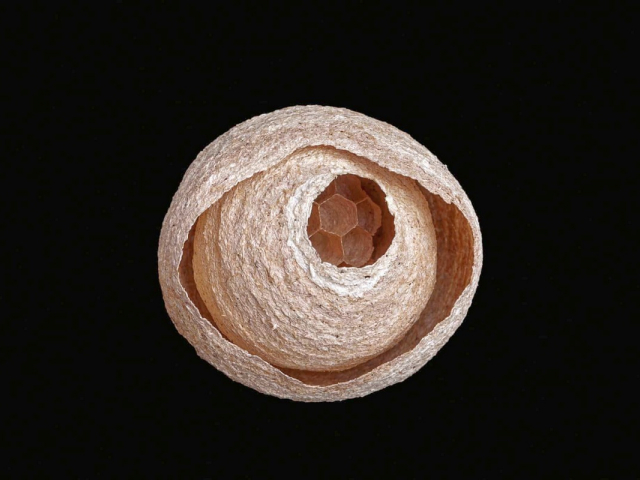
First paper inventors
Thousands of years before humans learned to make paper, other inhabitants of the planet were already building their homes out of it. By chewing wood fibers and mixing them with saliva, wasps produce a strong, lightweight, and waterproof cardboard. Their multi-tiered combs are protected externally by a multi-layered shell that functions like a thermos. Air gaps between the layers of “paper” shield larvae from temperature swings. This technology is so refined that, according to legend, the earliest Chinese papermakers drew inspiration from the structure of wasp nests.
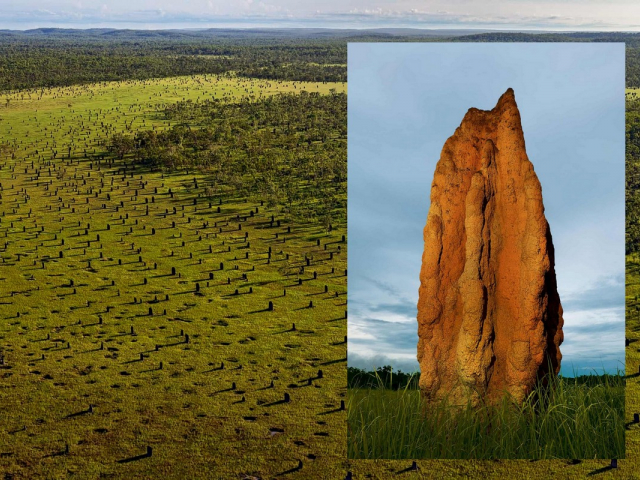
Living skyscrapers with climate control
If termites were human-sized, their towers would reach kilometres into the sky — taller than any building on Earth. But height is not the primary goal. Termite walls are riddled with a network of channels that capture even the slightest air movement, while a central shaft acts as an exhaust. This system regulates temperature and humidity inside the mound in heat and rain alike, creating perfect conditions for growing fungal gardens. Termites invented air-conditioning millions of years ago, equipping their “skyscrapers” with this primitive yet effective system.
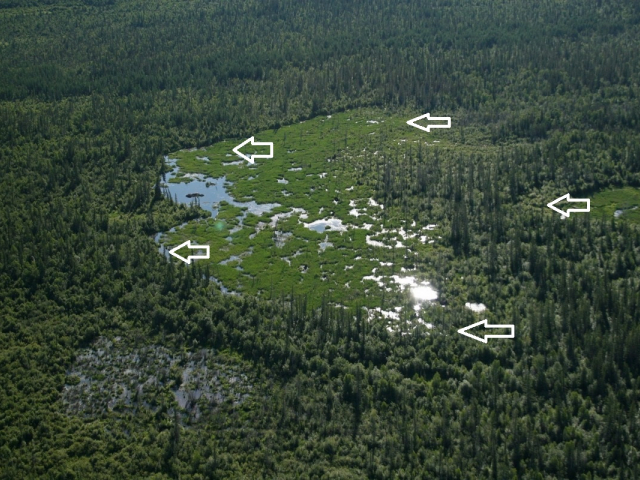
“Hydro‑engineers” reshaping landscape
Beavers are the only creatures besides humans that can radically transform landscapes to suit their needs. By building dams of branches, stones, and mud, they block rivers, creating deep ponds. The strategy pays off: water protects the entrance to their lodge and eases the transport of building materials. The largest beaver dams — the longest in Canada, reaching 850 metres — are even visible from space. Ponds act as natural water filters and flood buffers. Beavers are the planet’s most efficient hydro-engineers.
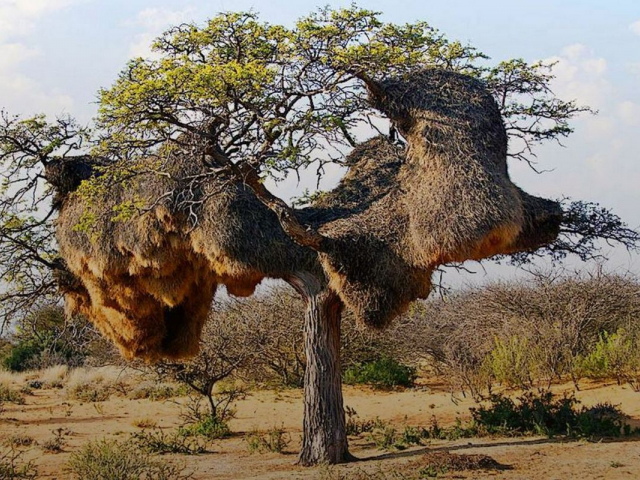
Condominiums in acacias
In Africa’s arid regions, acacia trees are often hung with enormous, haystack-like structures. These communal nests belong to social weaver birds — true multi-unit dwellings up to six metres long that shelter hundreds of couples. Each “apartment” has a separate lower entrance protected from predators by thorns. The communal bower also offers thermoregulation: a warm central core and cooler outer chambers that provide shade on hot days. It is the oldest example of dense “urban” housing perfectly adapted to the harsh savanna climate.
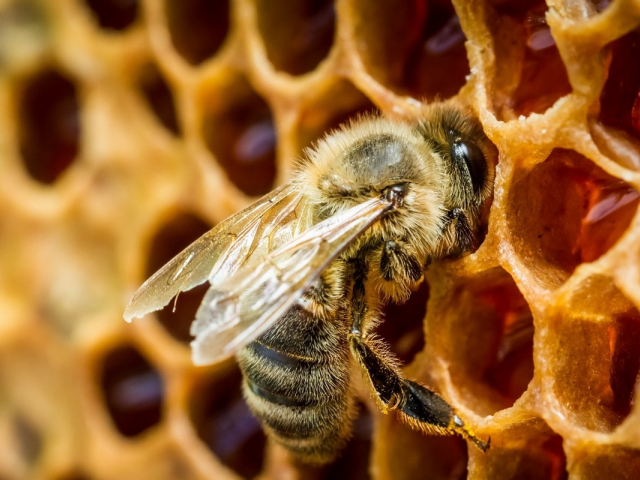
Geometric ideal of efficiency
For humans, the hexagon is just a shape, but for a bee, it is the formula for maximum efficiency. By building honeycombs from wax secreted by their own bodies, bees create the perfect structure for storing honey and rearing larvae. Mathematicians have shown that hexagons cover the largest area with the least material, while providing enormous strength. Each cell is inclined exactly 13 degrees, so the honey does not drip out. Honeycomb is a triumph of biological mathematics and a form of natural 3D printing.
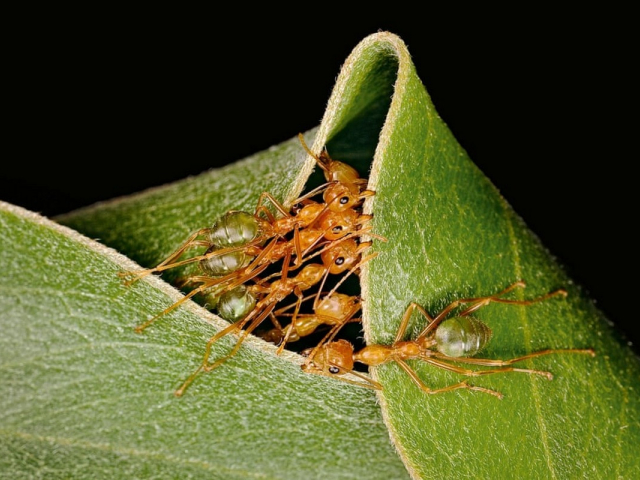
Living chains and silk seams
Some ants build nests right in the tree canopy by literally sewing live leaves together. A group of worker ants forms a living chain to pull leaf edges together. Other workers then bring in larvae and use them as “glue guns”: the larvae secrete tough silk that firmly fastens the leaves. This is an example of using “living tools” and extraordinary cooperation. The nest can be built in hours and withstand a tropical storm.
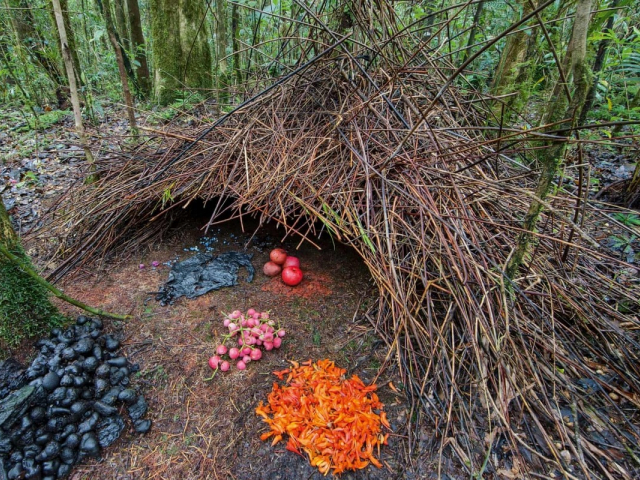
Interior designer and landscaper
The bowerbird is the world’s only architect who builds not for shelter but for art. Males construct elaborate bowers from twigs and then decorate the surrounding area with items of certain colours — blue bottle caps, berries, flowers or shells. The bird sorts decorations by size and hue to create optical illusions that make it appear larger. If a twig is moved, the male immediately restores it. This is pure aesthetics and design aimed at attraction — architecture as seduction.
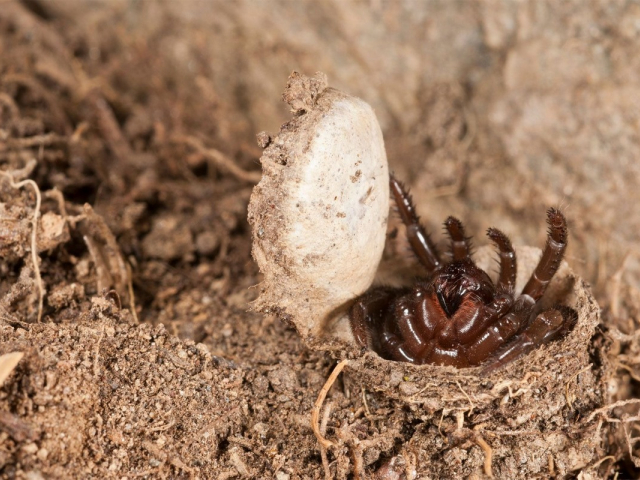
Secret bunker with hatch
Trapdoor spiders (family Ctenizidae) are masters of camouflage and subterranean construction. They dig deep vertical burrows whose walls they fortify with a mixture of soil and silk. Then the spider constructs a tight lid from silk and soil, hinged with a web hinge, to form a perfectly fitting trapdoor. The lid is camouflaged on the surface with moss or grass, becoming virtually invisible. The spider holds the door closed from inside, sensing prey vibrations. It’s an example of covert fortification and mechanical genius in nature — the door cannot be found without special equipment.