 English
 Русский
 Bahasa Indonesia
 Bahasa Malay
 ไทย
ไทย Español
 Deutsch
 Български
 Français
 Tiếng Việt
 中文
中文 বাংলা
বাংলা हिन्दी
 Čeština
 Українська
 Română

Algorithmic overdrive: incredible efficiency
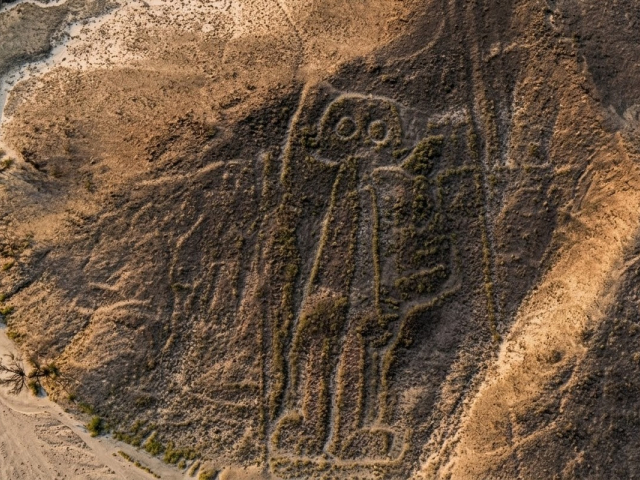
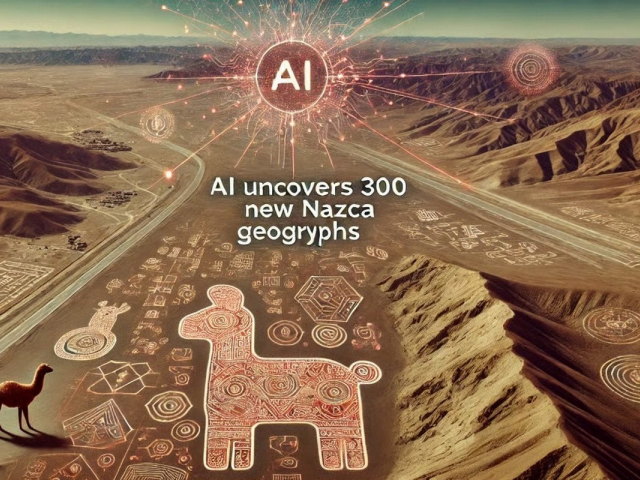
Using artificial intelligence to analyse the Nazca plateau’s surface, scientists discovered 303 new geoglyphs in just six months. By comparison, over the previous 100 years, humans had found only 430 figures. The deployment of IBM Research neural networks changed the game, accelerating discovery by a factor of 16. The AI processed terabytes of aerial imagery and drone data, flagging 47,410 potential sites. After filtering, 1,309 “candidates” remained, which the team then inspected in the field.
Whisper of relief: return of small forms
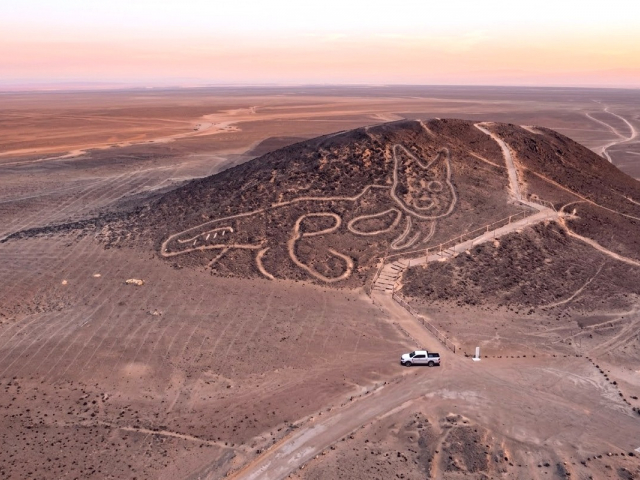
For a long time, researchers focused on the giants — linear geoglyphs up to 90 metres long that are visible only from space. But AI forced archaeologists to “bend down” to the earth. Most of the 303 new finds are relief‑type figures: their average length is just nine metres. These forms were created by removing only a thin surface layer of soil, making them extremely vulnerable to erosion and nearly invisible to the human eye under the blazing sun. The true history of Nazca is hidden not in scale but in detail.
Ancient surrealism: orca with knife
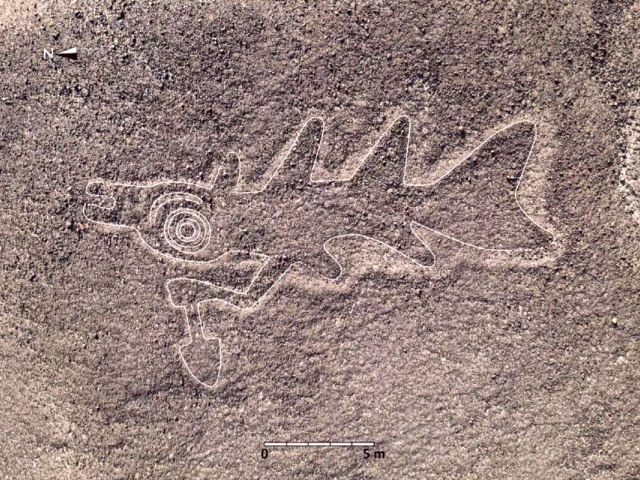
Among the hundreds of new images, one discovery shocked the scientific community: a 22‑metre figure of an orca clutching a knife in its fin. This image, previously seen only on Nazca pottery, now appears on the landscape itself. Why would a sea creature be armed? For ancient artists, this was not a mere drawing but a powerful symbol linking mythology to lived reality. AI did more than find lines — it opened access to the visual code of beliefs that had been lost or purely local.
Faces from dust: human factor
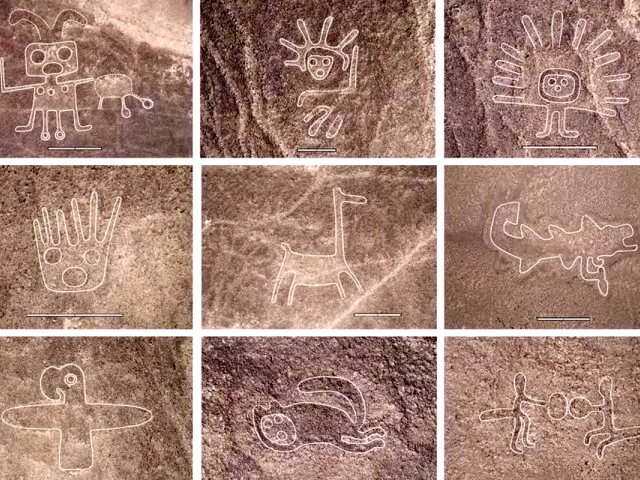
Whereas classic geoglyphs mainly depicted wild nature, the new Nazca finds are a hymn to humanity. AI revealed dozens of anthropomorphic figures — people in strange hats, participants in processions, and small scenes of ritual interactions with animals. These “relief” humans of Nazca feel more intimate and alive. They seem to address a viewer, standing nearby, rather than the gods in the sky. Thanks to machine vision, archaeologists have “humanized” the desert, filling it with images of the people who lived on these stones two millennia ago.
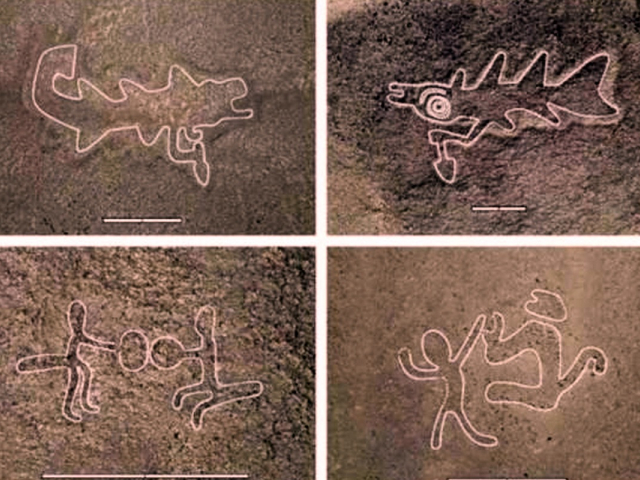
Nazca people who lived here 2,000 years ago
AI discovered dozens of anthropomorphic figures — people in unusual headgear, procession participants and scenes of interaction with animals. These relief people of Nazca appear more intimate and alive, speaking directly to a nearby viewer rather than to deities above. Machine vision allowed archaeologists to populate the plateau with the faces of those who inhabited these stones two thousand years ago.
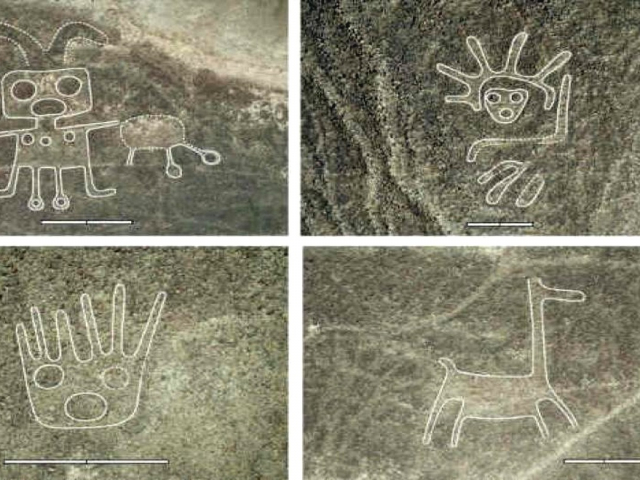
Caravans of past: economy on landscape
Among the new figures, domesticated animals predominate, particularly llamas. For the Nazca culture, the llama was not merely livestock but the backbone of logistics and the economy, a living bridge between the Andes and the coast. Llama depictions are often grouped into caravans or processions. AI revealed a systematic distribution of such figures, supporting the idea that the plateau was not only a ceremonial centre but also a zone of active human exchange.
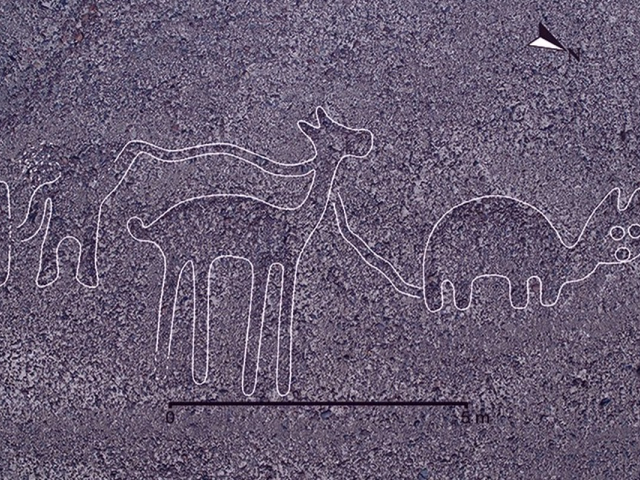
Trail code: navigation of sacred
AI’s chief theoretical finding was that the Nazca geoglyphs formed a system. It appears the small relief figures acted as “road signs” or altars for participants in ritual processions. Oriented at eye level for a walking person, they guided worshippers to the great linear geoglyphs or sacred sites. AI helped reconstruct this communication network, showing the Nazca plateau to be a single giant interface where each figure was a functional part of an ancient navigational system.
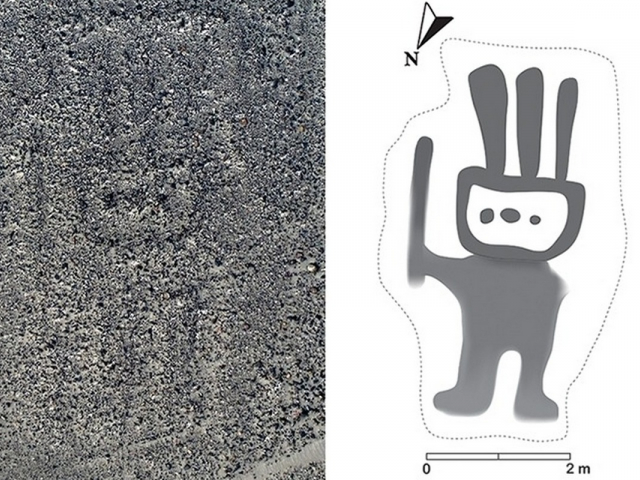
Reality filter: from pixels to footsteps and shovels
Despite the power of IBM algorithms, the decisive work remained human. Researchers warn that every digital lead must be verified on foot. AI is prone to false positives, mistaking random soil disturbances or modern machinery tracks for geoglyphs. Archaeologists covered hundreds of kilometres, verifying each of the 303 finds with drones and field surveys. The machine acted as a super‑scanner, and humans served as the final quality control — a tandem that has become a model for modern science.
Event horizon: thousands of ghosts in queue
The most exciting element of Sakai’s report is that the work has only begun. The algorithm has already flagged roughly 1,000 further potential points awaiting validation. Archaeology is ceasing to be the science of “luck” and becoming a discipline of big data. The technologies refined in Peru are now being adapted to locate burial mounds on the steppe and sunken cities under the ocean. Nazca was a proving ground. Beneath our feet lie entire libraries of history. At last, we have a tool that can read them.