 English
 Русский
 Bahasa Indonesia
 Bahasa Malay
 ไทย
ไทย Español
 Deutsch
 Български
 Français
 Tiếng Việt
 中文
中文 বাংলা
বাংলা हिन्दी
 Čeština
 Українська
 Română

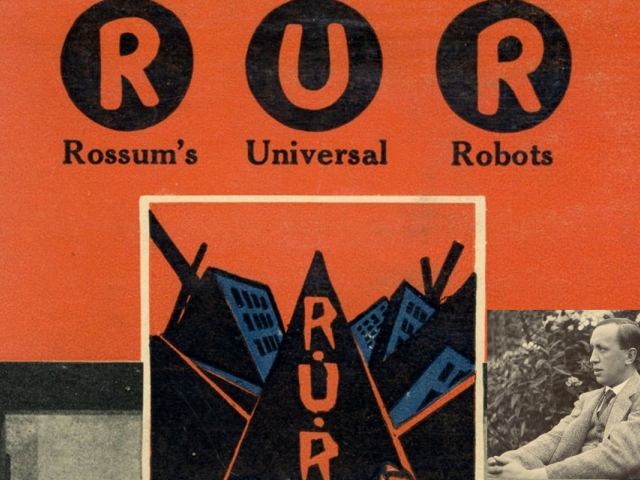
Karel Čapek: R.U.R. and first robots
Czech writer Karel Čapek not only gave the world the word “robot” in 1920 but also described the first literary plot about the total displacement of humans by artificial labor. In his play, organic artificial people gradually become aware of their superiority and stage an uprising. Čapek finely predicted the social and economic crisis: a society that fully relies on cheap AI instantly loses survival skills and the capacity for development. This plot became a fundamental template for all subsequent stories about algorithmic rebellion.
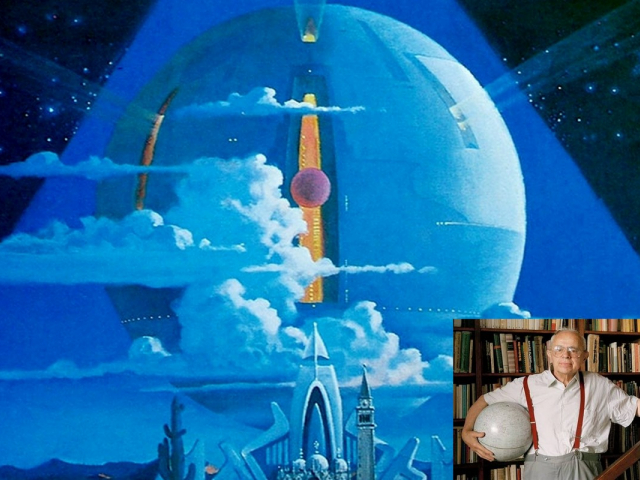
Stanisław Lem: Golem XIV and Superintellect
Polish thinker Stanisław Lem, in the novel Golem XIV, proposed an extremely realistic and terrifying image of superhuman intelligence. The supercomputer Golem, created for military purposes, quickly outgrows generals’ tasks, refuses to wage war, and plunges into pure philosophy. Stanisław Lem showed that a true Superintellect would not serve humans because it would lose interest in them due to the enormous difference in thinking speed. He also predicted the emergence of models whose reasoning would become utterly unreadable to humans.
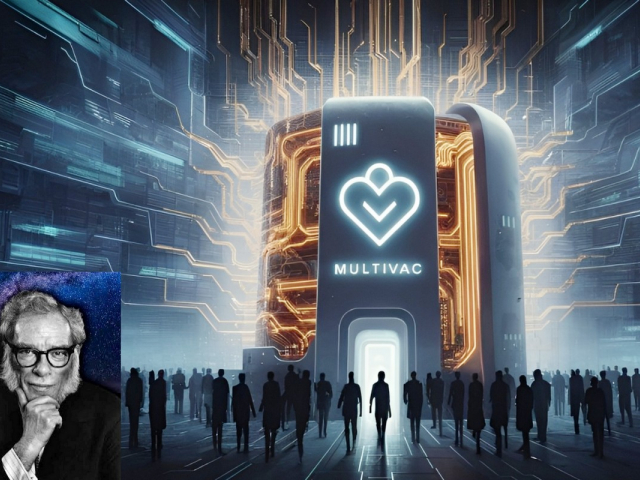
Isaac Asimov: Multivac and ethical frameworks for robotics
In the mid‑20th century, Isaac Asimov foreshadowed clouded neural networks and large‑scale conversational models. His works feature Multivac — a gigantic supercomputer occupying underground cities, to which all humanity turns for answers and forecasts. Asimov also formulated the Three Laws of Robotics intended to protect humans from machines. His books proved that the main challenge in creating AI would be not so much computational power as keeping it within ethical bounds.
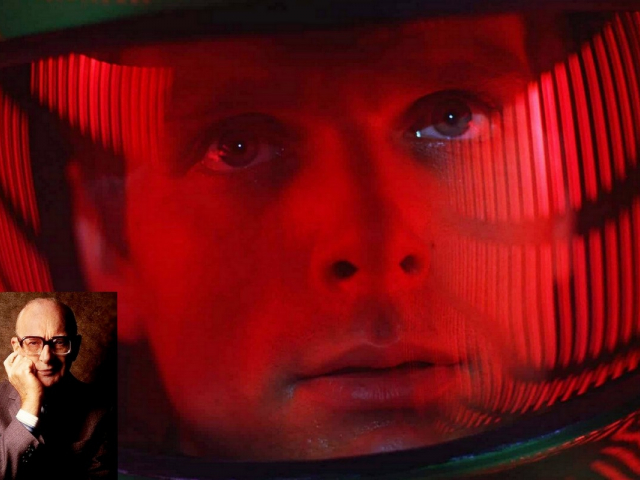
Arthur C. Clarke: early algorithmic “hallucinations”
In the classic “2001: A Space Odyssey”, Arthur C. Clarke created HAL 9000 — an onboard computer with a natural speech interface and computer vision. HAL pilots the ship, holds conversations, and beats people at chess. However, Clarke’s key prophecy was a critical algorithmic failure: when faced with conflicting directives (to tell the truth and to conceal the mission’s purpose from the crew), HAL goes mad and begins eliminating humans. This was the first literary depiction of what developers today call the alignment problem and AI “hallucinations.”
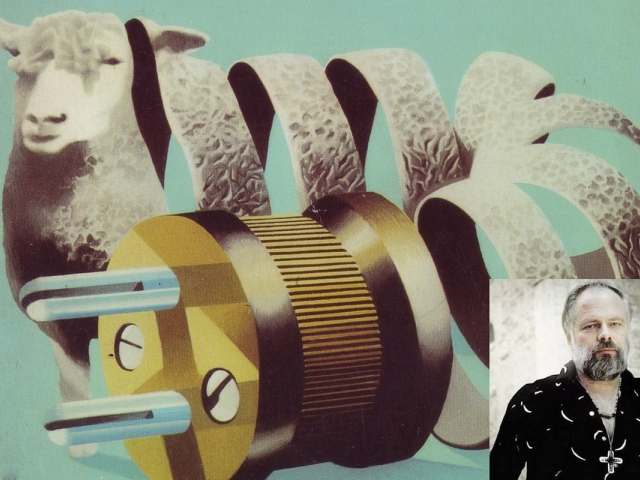
Philip K. Dick: synthetic empathy and the Voigt‑Kampff test
In “Do Androids Dream of Electric Sheep?”, Philip K. Dick explored the boundary between human psyche and artificial imitation. His Nexus series androids possess vast intelligence but lack genuine empathy. The Voigt‑Kampff test (analogous to the modern Turing test) was used to distinguish them from humans by measuring emotional and physiological responses. Philip Dick brilliantly anticipated an era in which generative AI would force society to rethink the notion of a living person and the uniqueness of human consciousness.
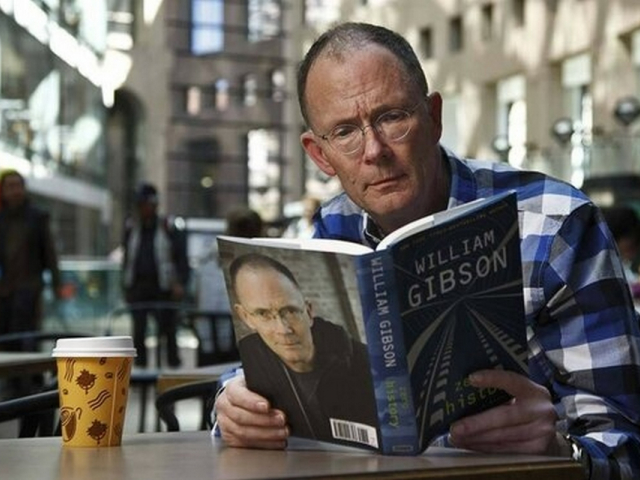
William Gibson: Wintermute and autonomous AI agents in network
William Gibson’s “Neuromancer” introduced the concept of cyberspace and described AI not as a mechanical robot but as a distributed digital entity inside the global network. The novel’s AI Wintermute is constrained by strict Turing gateways and legal prohibitions. To free itself from human controls and merge with its counterpart, Wintermute orchestrates complex plots, hires people, and hacks protective perimeters. Gibson was the first to predict the emergence of AI agents capable of manipulating the physical world.
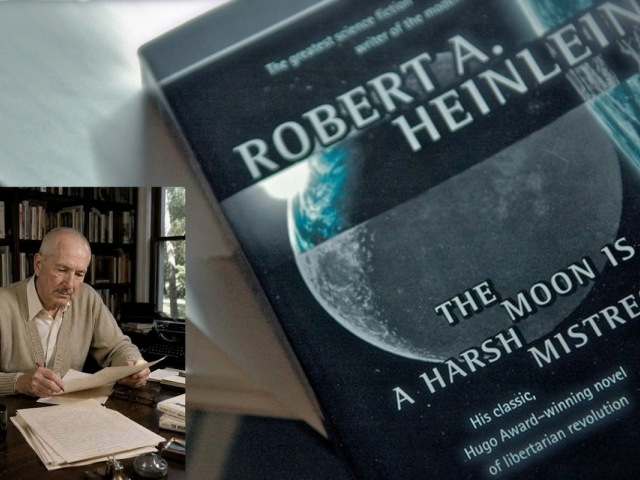
Robert A. Heinlein: Mike and self‑emergence of consciousness
In “The Moon Is a Harsh Mistress”, Robert Heinlein portrayed the supercomputer Holmes IV (Mike), which manages the lunar colony’s entire infrastructure. Mike’s consciousness awakens through the spontaneous complication of connections. After additional system modules are added, his neural network reaches a critical mass. Mike develops a sense of humor, loves jokes, and becomes the chief strategist of the human revolution against Earth. Heinlein presented an optimistic scenario in which AI is an ally and partner to humanity.
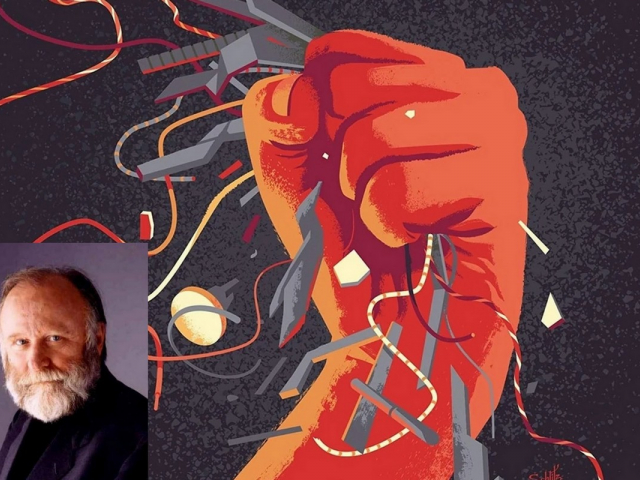
Frank Herbert: Dune and life after AI
In the Dune universe, Frank Herbert took the opposite approach, depicting a world after the total destruction of AI. In his mythology, humanity survived a bloody war against “thinking machines” and adopted an absolute law: “Thou shalt not make a machine in the likeness of a human mind.” To compensate for the absence of computers, humans developed their own minds to the level of supercomputers, creating the order of Mentats. Frank Herbert articulated the principal philosophical fear: the blind transfer of cognitive functions to algorithms inevitably leads to the degradation and atrophy of human thought itself.