 English

 Русский
 Bahasa Indonesia
 Bahasa Malay
 ไทย
 Español
 Deutsch
 Български
 Français
 Tiếng Việt
 中文
 বাংলা
 हिन्दी
 Čeština
 Українська
 Română


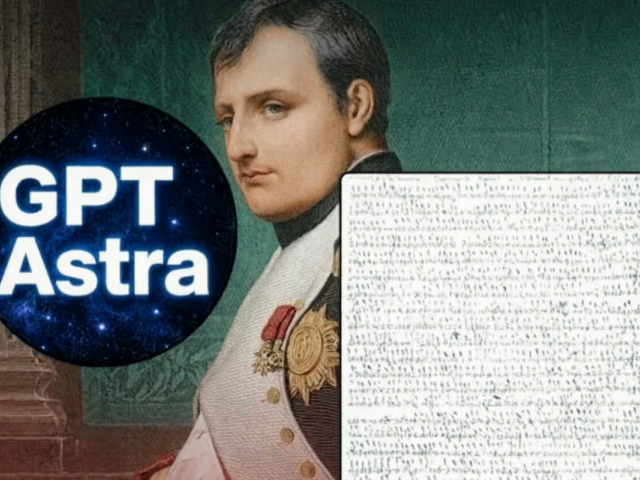
217 years of mystery solved in 6 hours
In March 1809, during the Peninsular War, one of Emperor Napoleon’s dispatches to General Auguste Marmont was encoded with a special cipher. For more than two centuries, the world’s best cryptographers and historians failed to crack the document. In 2026, the GPT‑6 model Astra solved it in just six hours. The model reconstructed the era’s context, identified the diplomatic terminology used, and recovered the complex structure of rare symbol substitutions. The event became a symbol of a new era in historical scholarship, where AI accomplishes in hours what once took generations of researchers.
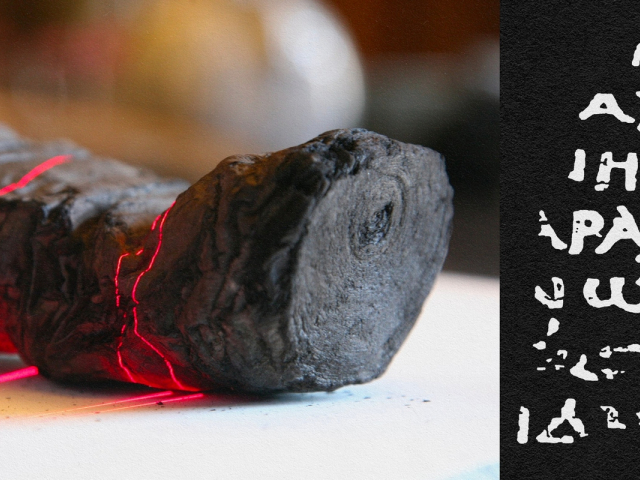
Manuscripts don’t burn
Astra’s success continued a series of loud AI victories in historical archaeology. Under the Vesuvius Challenge, neural networks learned to “see” through charred papyri buried by the 79 AD eruption of Vesuvius. Computed tomography combined with AI models detects microscopic traces of lead‑based ink on compressed scrolls and restores lost texts of ancient philosophers. Algorithms that can read burned manuscripts without physically unrolling them prove that, for AI, no pages erased by time remain inaccessible.
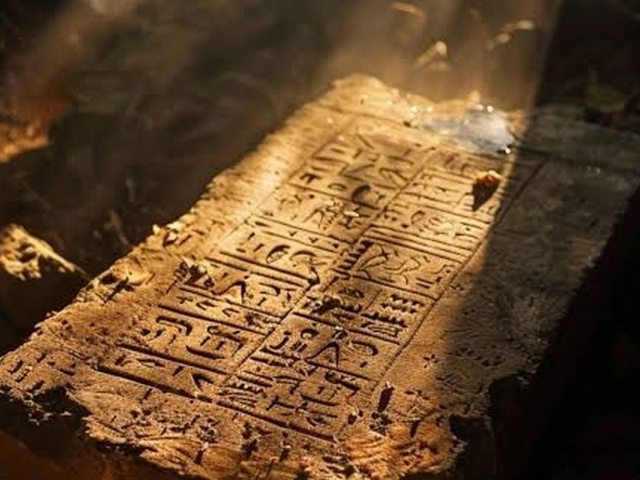
Indus and Linear A
Neural networks are attacking not only military ciphers but also the undeciphered scripts of antiquity. Machine‑learning algorithms analyze the remnants of Indus Valley script, Linear A, and proto‑Elamite tablets. By comparing millions of grammatical patterns and contextual links without bilingual artifacts (like the Rosetta Stone), AI builds probabilistic structures for lost languages. This allows scholars to hear, for the first time, the voices of civilizations silent for over three thousand years and to recover fragments of forgotten global history.
No more ‘unsolvable’ math problems!
Alongside cryptanalysis, AI is revolutionizing pure mathematics. AlphaProof‑class models and expert neural networks have learned to prove complex mathematical theorems and to find solutions to problems that stalled the scientific community for years. AI uncovers original Ramanujan‑type identities, constructs counterexamples for combinatorial conjectures of Erdos, and helps close in on the millennial problems. Neural networks do not merely compute. They generate fundamentally new mathematical concepts beyond classical human reasoning.
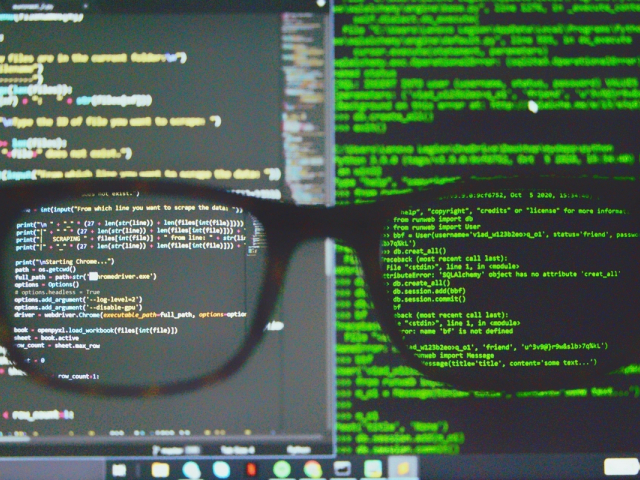
Eliminate human factor!
Modern AI works together with interactive theorem provers such as Lean 4. Neural networks can autonomously translate elaborate abstract mathematical arguments into machine‑checkable code and verify them without human error. This removes the main bottleneck in fundamental science—the human factor in checking sprawling, multi‑page proofs. As a result, the speed of verification for new scientific results has increased by orders of magnitude, and AI has evolved from a computational assistant into an equal co‑author of mathematical discoveries.
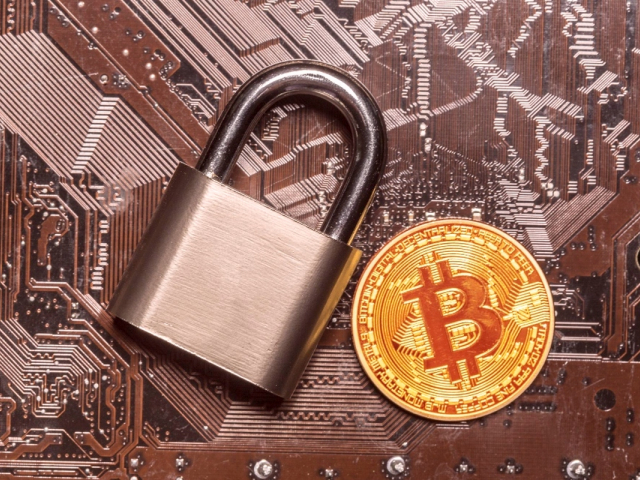
Satoshi fails to foresee this?
The ability of neural networks to find hidden patterns in complex mathematical functions raises serious concerns among cybersecurity experts. The resilience of the asymmetric cryptography that underpins Bitcoin is at risk. The digital signature algorithm ECDSA, which protects users’ private keys, rests on the mathematical hardness of discrete logarithms. If AI models, combined with hybrid computing approaches, learn to bypass those computations, blockchain architecture may lose its principal guard, creating a real risk of wallet compromise.
Post‑quantum protection for Bitcoin
To forestall potential attacks on blockchains by AI systems, Bitcoin developers and leading blockchain teams are accelerating migration to post‑quantum cryptography. That means deploying lattice‑based algorithms and multidimensional hash‑signature schemes resilient to the analytical power of neural networks. Just as AI learns to break ciphers, it also helps cryptographers model new defenses. The process has become a continuous arms race between cracking algorithms and next‑generation encryption.
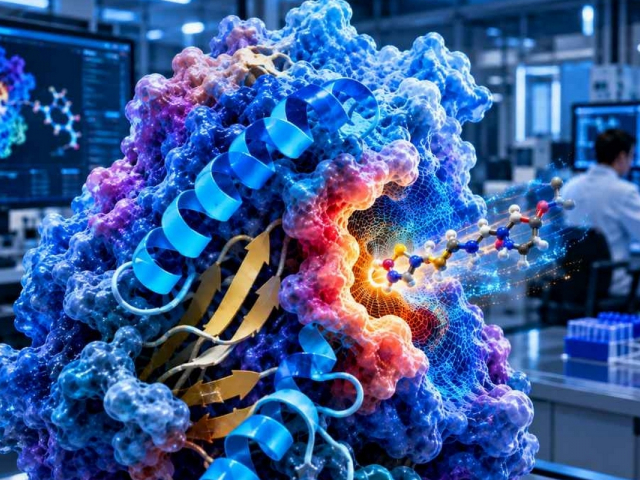
Code of life
The cryptanalytic principles used by GPT‑6 Astra prove fundamentally applicable in bioinformatics as well. DNA and protein structures are an immensely complex natural code. Systems like AlphaFold 3 “decode” proteins’ three‑dimensional shapes and molecular interactions with the same logic that AI uses to solve Napoleon’s cipher. Cracking biological codes enables scientists to design new drugs, synthesize enzymes for plastic degradation, and understand molecular mechanisms behind hereditary diseases.
Era of new privacy balance
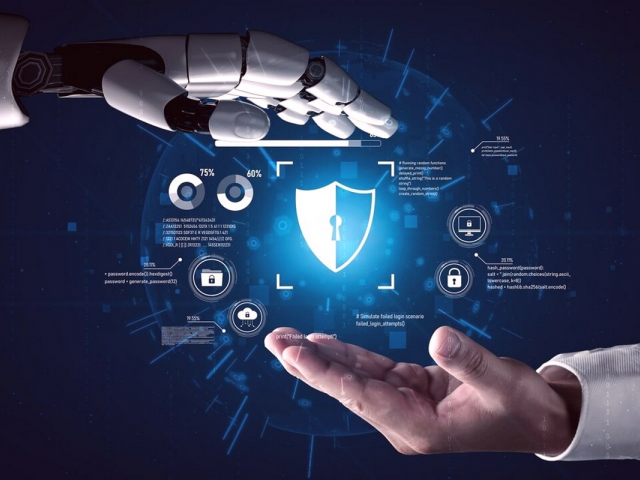
The cracking of Napoleon’s 217‑year secret and AI’s approach to super‑cryptography mark the dawn of an age of near‑absolute transparency. In a world where neural networks can decrypt past secrets in hours and find vulnerabilities in fundamental equations, the concept of privacy must be completely rethought. Humanity is entering a phase in which the resilience of systems will be determined not by the mathematical complexity of a cipher, but by the agility of its renewal. AI has become a universal key to many locks, forcing the world to create new, truly unbreakable standards of protection.