 Gold Daily Forecast Gold Price Holds Recovery Gains as Markets Reassess Inflation Risks After US-Iran Breakthrough
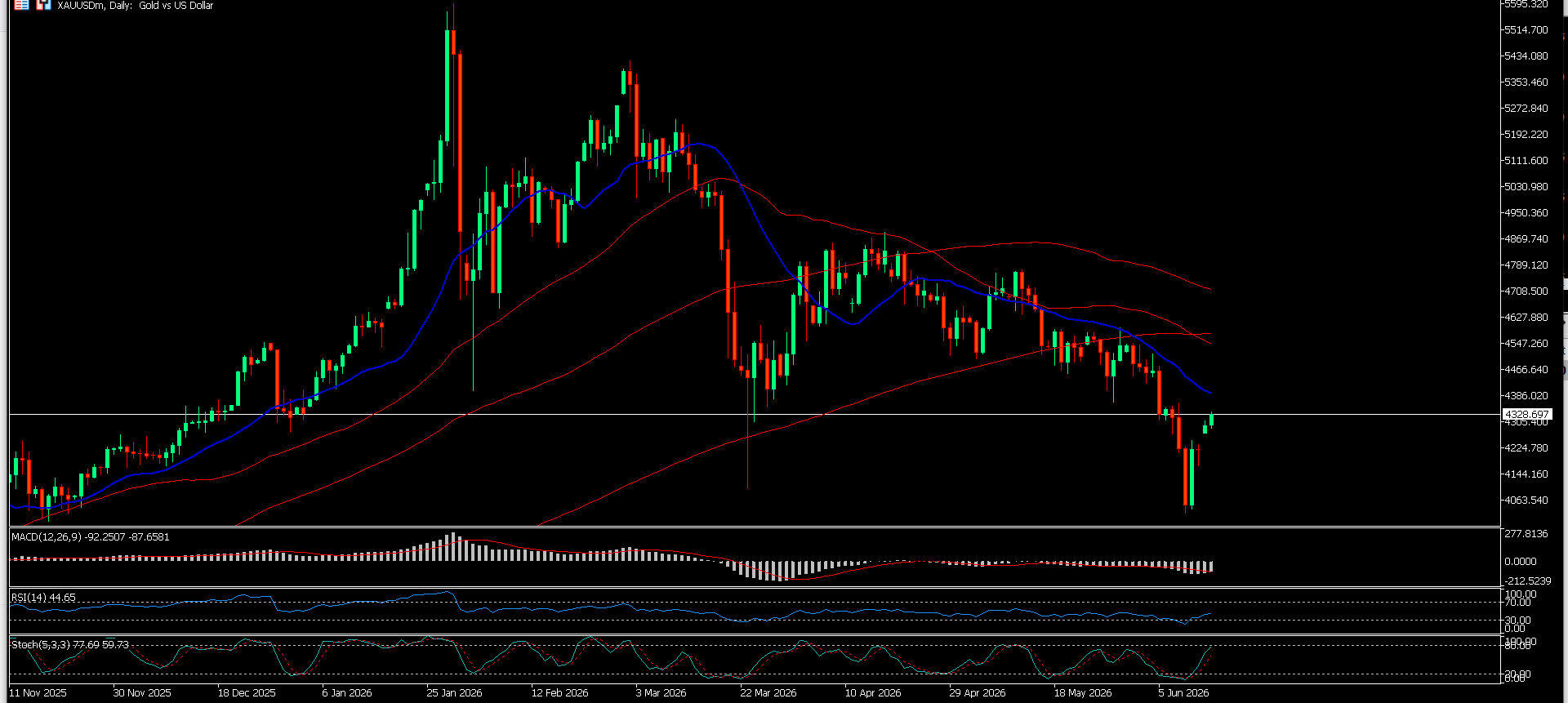
 Gold started the week on firmer footing, but the rebound tells a deeper story than a simple reaction to geopolitical headlines. While the announcement of a framework agreement between the United States and Iran initially reduced fears of a prolonged Middle East conflict, investors are increasingly shifting their attention toward what the deal means for inflation, monetary policy, and capital allocation across global markets. As a result, gold remains trapped between fading safe-haven demand and a broader reassessment of future interest-rate expectations. The market's first reaction to the agreement was straightforward. Traders interpreted the potential reopening of the Strait of Hormuz and the easing of sanctions pressure as developments that could improve global energy flows and reduce supply-side inflation risks. Oil markets responded accordingly, and expectations for future inflation moderated. Under normal circumstances, such an environment would be expected to weigh heavily on gold because lower inflation pressure reduces the urgency for investors to seek protection through precious metals. However, the metal has shown surprising resilience. That resilience reflects a growing realization among institutional investors that the agreement remains conditional and far from fully implemented. Iran's insistence on key commitments, including the release of frozen assets and the formal end of military operations, highlights that substantial political hurdles remain. Rather than aggressively abandoning defensive positions, many portfolio managers appear to be reducing risk cautiously while waiting for tangible progress. This behavior is visible in broader capital flows. Safe-haven demand has eased, but it has not disappeared. Investors are reallocating selectively rather than decisively. Some capital has rotated back into equities and growth-sensitive assets as geopolitical fears subside, yet a meaningful portion remains parked in defensive instruments amid lingering uncertainty about both the agreement and the global economic outlook. The shift in Federal Reserve expectations also plays a critical role. Markets now assign a lower probability of another rate increase later this year than they did only a week ago. That adjustment has reduced some of the pressure that had been building on precious metals. Gold, after all, competes directly with interest-bearing assets. When investors expect higher rates, the opportunity cost of holding non-yielding bullion rises. When tightening expectations ease, that burden becomes lighter. Yet the story is not entirely bullish for gold. Economic conditions in the United States remain relatively stable, and policymakers continue to emphasize vigilance regarding inflation. Even if energy-related pressures ease, central bankers are unlikely to declare victory prematurely. This explains why Treasury yields have not collapsed despite the improvement in geopolitical sentiment. Investors understand that inflation can moderate while still remaining uncomfortably above long-term targets. From a market psychology perspective, the recent recovery appears driven more by short-covering than aggressive fresh buying. The sharp decline from recent highs left positioning heavily tilted toward the bearish side. As geopolitical risks eased and rate-hike expectations softened, some traders chose to lock in profits on short positions, creating room for a rebound. That dynamic differs significantly from a conviction-driven rally supported by strong new demand. This distinction matters because sustainable bull trends usually require fresh institutional inflows rather than temporary short covering. Until investors become convinced that real yields have peaked and monetary conditions are moving toward a more accommodative phase, gold may struggle to attract the type of capital necessary for a lasting upside breakout. Technically, the broader structure remains corrective despite the latest bounce. Gold continues to trade beneath the 100-day Simple Moving Average near $4,762, confirming that the longer-term trend remains under pressure. Price also remains below key medium-term resistance zones, suggesting that sellers still maintain strategic control of the market. The immediate recovery barrier sits near $4,415, which aligns with the Bollinger middle band and represents the first meaningful test for buyers. A sustained move above this level would improve sentiment and expose the next resistance area around $4,685. Using the recent decline from the cycle high, the 38.2% Fibonacci retracement also aligns closely with this broader recovery zone, reinforcing its importance. On the downside, support remains concentrated around $4,142. A decisive break below this level would likely attract renewed selling pressure and increase the probability of a retest of the $4,026 low. Beneath that area, the psychological $4,000 threshold becomes the next major reference point for market participants. For now, gold finds itself in a transition phase. Geopolitical tensions have eased, but uncertainty has not vanished. Inflation concerns have moderated, but they remain present. Central banks are becoming slightly less hawkish, yet policy remains restrictive. Until one of these narratives gains clear dominance, gold is likely to remain highly sensitive to shifts in expectations, positioning, and investor confidence.
*The market analysis posted here is meant to increase your awareness, but not to give instructions to make a trade
 English
 Русский
 Bahasa Indonesia
 Bahasa Malay
 ไทย
ไทย Español
 Deutsch
 Български
 Français
 Tiếng Việt
 中文
中文 বাংলা
বাংলা हिन्दी
 Čeština
 Українська
 Română
